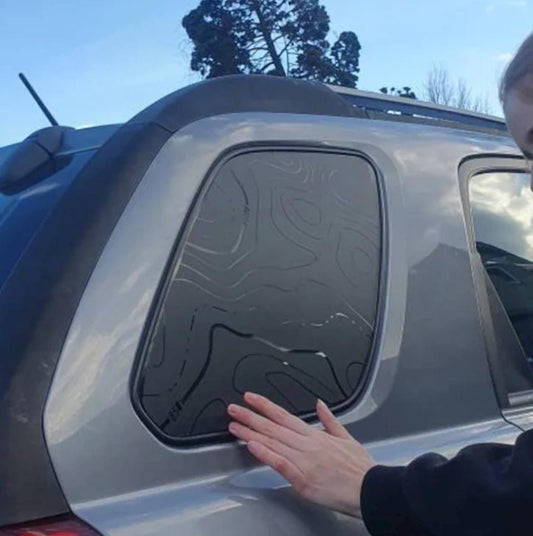
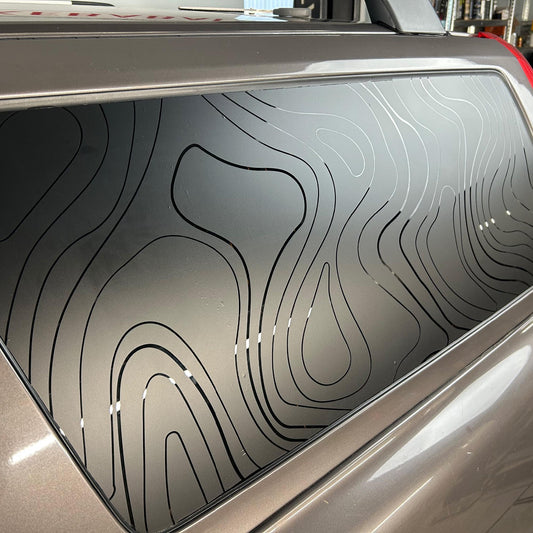
You can install a topographic window decal with the dry method in a single afternoon: clean the glass with isopropyl alcohol, hinge the sheet in place with masking tape, lay it down from top to bottom, squeegee, trim to the window edge, then peel off the transfer tape. This guide walks through each step on a Volvo XC70 P2, using the Topographic Window Decal (Universal One Sheet). The same method works on any car, van, SUV or estate with flat or gently curved glass.
Key Takeaways
- Dry application gives you no second chance: the vinyl grabs as soon as it touches the glass. Mark your position and hinge the sheet with masking tape before you peel the backing.
- Apply at +8 °C or warmer. That is the minimum application temperature ORAFOL lists for ORACAL 551, the vinyl this decal is cut from.
- Order of work: clean, hinge, lay down, squeegee, trim, squeegee the cut edges, peel the transfer tape.
- Small bubbles are normal after a dry install. Give the adhesive a week before you treat anything as a problem.
Prefer to watch? Open the full installation video on YouTube.
What makes this topographic decal different
It's a full topographic sheet, not a pre-cut sticker. You get one oversized sheet and trim it to your window, so it fits almost any vehicle and any window shape. It's cut from ORACAL 551, a high-performance calendered vinyl from ORAFOL, and it ships with transfer tape on top so the contour lines stay perfectly spaced while you apply them.
| Sheet size (mm) | Sheet size (inches) | Typical use |
|---|---|---|
| 1300 × 600 | 51 × 23 | Large tailgate glass and long van side windows |
| 910 × 560 | 36 × 22 | Most rear quarter and rear door glass on wagons and estates |
| 762 × 470 | 30 × 18 | Mid-size side windows |
| 609 × 376 | 24 × 14 | Small quarter lights and compact cars |
The sheet comes in 11 colour and finish options, including black, white and grey in matte or gloss, plus orange, red, brown, green and blue gloss. Every photo and the video in this guide show black matte. A matte finish doesn't reflect, so the lines look sharp and understated on glass.
Covering several windows, like both rear quarters plus the tailgate? Order a bundle of two or more sheets so you have spare material for trimming.
Dry or wet application?
Our product page recommends wet application because a film of soapy water lets you slide the decal into place. This guide uses the dry method, and it's worth knowing the trade-off before you start:
- Dry: the vinyl sticks the moment it touches the glass. You can peel the transfer tape straight away, and no water gets trapped under the edges. Accurate marking matters more, because you can't reposition the decal.
- Wet: you can reposition the decal, which forgives a crooked first placement. You have to squeegee the water out and wait before peeling the transfer tape.
If this is your first vinyl install, our general guide to installing car window vinyl decals covers the wet method.
What you need
- Glass cleaner (no wax)
- 70%+ isopropyl alcohol and a clean microfibre cloth
- Masking tape
- Squeegee, or an old bank card wrapped in microfibre
- Sharp knife or fresh razor blade for trimming
- Tape measure
How to install a topographic window decal: dry method, step by step
1. Measure your window first
Measure the window's height and width before you touch the decal, and compare them with your sheet size. The sheet should be slightly larger than the glass so you have material to trim after it's applied.
On the Volvo XC70 P2, the rear quarter windows are angled. Measure the longest diagonal as well, because that's the dimension that decides whether the sheet covers the window.
2. Clean the glass and check the temperature
Wash the window, then wipe it with isopropyl alcohol on a microfibre cloth to remove wax, oil and residue. If there's an old sticker on the glass, take it off first. Our decal removal guide covers heat and adhesive removal. Let the glass dry completely.
Work at +8 °C or warmer, which is the minimum application temperature in ORAFOL's technical data sheet for ORACAL 551. In cold weather, do the install in a garage or let the glass warm up in the sun first. Dry application doesn't forgive dirty or cold glass. Any contamination shows up later as a bubble or a lifting edge.
3. Mark your position with masking tape
Hold the sheet up to the window and line it up exactly where you want it. Mark the top edge on the glass with masking tape. This step matters more with the dry method than with wet, because the vinyl can't be moved once the adhesive touches the glass.
4. Hinge the sheet and lay it down
Run a strip of masking tape along the top edge of the decal to hinge it to the glass. Fold the decal up, peel the backing paper away completely, then slowly lower the sheet onto the glass from top to bottom. Keep it taut as it lands. The adhesive grabs on contact, so take your time.
5. Squeegee from top to bottom
Squeegee firmly from the top down, in overlapping strokes, pushing air out towards the edges. If the window curves slightly, follow the curve with your strokes. With the dry method you're bonding the adhesive straight to the glass, so firm, deliberate passes work better than light ones.
6. Trim to fit
With the decal fully pressed down and the transfer tape still on, cut along the window edge with a sharp knife. Slow, clean cuts follow the glass line better than fast ones. On curved edges, score lightly and follow the curve in short strokes rather than one long cut. Keep the blade on the glass so you don't cut into the rubber seal.
7. Final squeegee pass
Go over the whole surface with the squeegee once more. Pay particular attention to the freshly cut edges and press them down firmly so they seal against the glass.
8. Peel off the transfer tape
Peel the transfer tape back on itself slowly, at a low angle, keeping it close to the glass rather than pulling it straight out. Watch the contour lines as you go. If a line starts lifting with the tape, lay the tape back down, press that spot with the squeegee, wait a few minutes and try again.
Small bubbles after a dry install are normal
Small air bubbles can appear after a dry install, especially near the edges. Most work themselves out over the next few days as the adhesive finishes bonding. Give it at least a week before deciding there's a problem.
If a larger bubble hasn't changed after a week, prick it with a fine pin and press the air out towards the hole.
Why the Volvo XC70 P2 suits a topographic decal

The XC70 P2's rear quarter windows are large, nearly flat panels, which are ideal for a sheet decal. On estates and wagons the big uninterrupted glass lets the whole contour pattern read properly. Small windows break the pattern up and lose the effect.
If you're building an adventure wagon or an overlanding rig, a topographic sheet across the rear quarter glass is one of the cleanest finishing details you can add. Working on a van instead? See our VW Transporter and Multivan decal guide for layout ideas.
Can you see through a topographic window decal?
Yes. The open contour lines cover only a small part of the glass, so you can still see out from the driver's and passengers' seats. That makes the decal a practical choice for rear quarter windows, where you still need to check blind spots. Solid tint film darkens the whole pane. This pattern doesn't.

Rules on decals on side and rear glass vary by country and state. Check your local regulations before covering the rear windscreen.
Troubleshooting a dry-applied window decal
| Problem | Likely cause | Fix |
|---|---|---|
| Wrinkles while laying it down | The sheet landed at an angle or wasn't held taut | Lift slowly from the nearest edge straight away, re-align and lay it down again. Dry vinyl can sometimes be peeled back if you're quick and gentle. |
| Edges lifting after a day or two | Glass not fully clean, or applied below +8 °C | Press the edges down firmly and don't wash the car for 48 hours. |
| Lines lifting with the transfer tape | Not enough squeegee pressure, or peeling too fast or at too steep an angle | Lay the tape back down, squeegee firmly, wait a few minutes, then peel slowly at a low angle. |
| Bubbles that won't go away | Trapped air that can't reach an edge | Prick with a fine pin, press the air out towards the hole and squeegee over it. |
| Sheet too small for the window | Measured width only, not the diagonal | Size up. The 910 × 560 mm sheet covers most rear quarter and rear door glass on wagons. For tailgates, go to 1300 × 600 mm. |
Get the topographic window decal
The sheet comes in four sizes and 11 colour and finish options, and ships worldwide from Lithuania.
Shop the Topographic Window Decal (Universal One Sheet) →
Covering more than one window? A bundle of two or more sheets saves money and gives you enough spare material for trimming.
About the author: Darius Sulcius is the founder of BROKENstickers. He designs, cuts and installs the decals we sell from our workshop in Lithuania, including the one in this guide. More about BROKENstickers.